Use this Merzouga travel guide to plan the practical side of your trip to the Erg Chebbi dunes, from roads and weather to cash and packing. Merzouga is a small village in south-east Morocco at the foot of Erg Chebbi, one of the country’s largest areas of sand dunes. It is far from the big cities, and that distance shapes every plan. This Merzouga travel guide is written by our team in Merzouga. It covers how far it is, how to get here, what the weather is like each month, what to pack, and the small practical things — cash, water, dress — that make a desert trip easier.
For official visitor information, including public holidays and entry rules, check the Moroccan National Tourist Office before you travel.
Where is Merzouga?
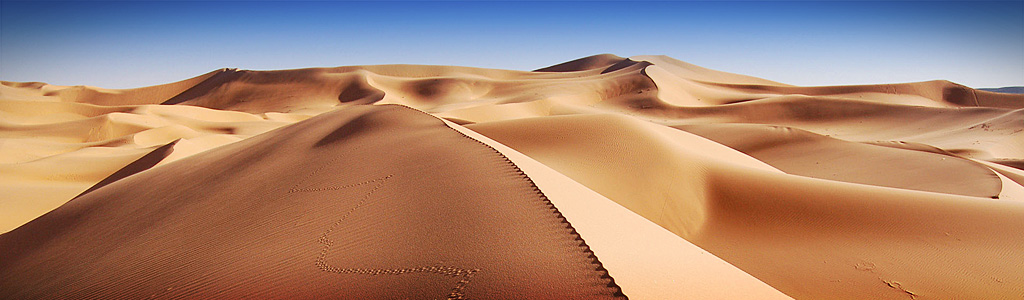
Merzouga lies close to the Algerian border, about 50 km south of Erfoud and around 35–40 km from Rissani [CONFIRM distances]. The village is a line of hotels, shops and houses along the western edge of the dunes. Behind it, the sand rises quickly; some dunes reach around 150 metres. Most desert camps sit inside the dunes, reached by camel or 4×4.
How far is Merzouga? Distances and driving times
The times below are approximate pure driving times. Real travel days are longer because of photo stops, lunch, police checkpoints and mountain roads.
| From | Approx. distance | Approx. driving time | Notes |
|---|---|---|---|
| Errachidia | ~130 km | ~2 h | Nearest airport with regular flights [CONFIRM routes] |
| Ouarzazate (via Agdz / Draa Valley) | ~370 km | ~6 h | Southern route; or via Dades and Todra (longer, more scenic) |
| Fes | ~460 km | 7.5–8.5 h | Via Middle Atlas, Midelt and the Ziz Valley |
| Marrakech (direct, via Agdz and N’Kob) | ~550 km | 9–10 h | Crosses the High Atlas at Tizi n’Tichka (~2,260 m) |
| Marrakech (via Dades and Todra gorges) | ~600–630 km | ~11–12 h | Usually split over two days |
| Casablanca (via Fes) | ~750 km | ~11–12 h | Not realistic in one day; normally 2+ days |
| Tangier (via Chefchaouen and Fes) | ~775 km | ~13–14 h | Normally split over 2–3 days |
Marrakech to Merzouga distance — the honest version: whichever road you take, it is a full day of driving or more. That is why most trips from Marrakech take three days, with one night on the way and one in the desert. Two-day trips exist, but they are very long days in the car. See Marrakech desert tours to Merzouga for the options from two to five days.
How to get to Merzouga
With a tour (driver included)
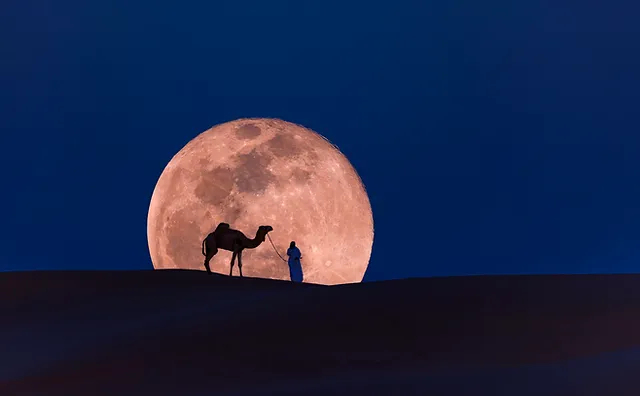
The simplest option. A driver picks you up at your accommodation, plans the stops and handles the roads. Popular starting points are Marrakech and Fes, and many travellers go one-way between the two, passing through Merzouga. Compare tours from Marrakech and tours from Fes, round trip or one-way.
By bus
Long-distance coaches run to Merzouga from cities including Marrakech and Fes [CONFIRM operator(s), e.g., Supratours/CTM, routes and current schedules]. Night buses are common, so you arrive tired. Book seats in advance in busy seasons. From the bus stop, you need a transfer to your hotel or meeting point — ask your hotel or desert camp [CONFIRM: our pick-up from bus stop].
By rental car
The roads to Merzouga are paved and generally in good condition, but distances are long and mountain passes can be slow. Things to know: – Do not drive a rental car onto the sand; most rental contracts do not cover off-road damage. – Fill up when you can: fuel stations are fewer in the south. – Expect police checkpoints; slow down and have your documents ready. – Avoid driving after dark if you can — animals, cyclists and unlit vehicles are common. – In winter, snow can close Tizi n’Tichka (from Marrakech) or slow the Middle Atlas road (from Fes). Check conditions before you leave.
By air
The nearest airport is Errachidia (Moulay Ali Cherif), about two hours away [CONFIRM current airlines and routes, typically connecting via Casablanca]. Ouarzazate airport is another option but further away. If flying saves you a long drive, see our Errachidia to Merzouga desert tours, which start from the airport.
Best time to visit: our Merzouga travel guide by season
Short answer: March to May and September to November are the most comfortable months. Winter is good if you pack warm clothes. Summer is possible but very hot.
Month by month
Temperatures are typical approximate ranges and vary year to year [CONFIRM climate figures before publishing].
| Month | Days | Nights | What to expect |
|---|---|---|---|
| January | Mild, approx. 15–20 °C | Cold, can approach 0 °C | Clear skies, cold nights at camp; warm layers essential |
| February | Mild, approx. 17–22 °C | Cold | Similar to January, slowly warming; possible Tichka snow early in month |
| March | Warm, approx. 20–25 °C | Cool | Good walking weather; wind begins to increase |
| April | Warm, approx. 25–30 °C | Mild | Pleasant but the windiest period; sandstorms possible |
| May | Hot, approx. 30–35 °C | Warm | Last comfortable month before summer; busy |
| June | Very hot, 35 °C+ | Warm | Early mornings and evenings only for activities |
| July | Very hot, often 40 °C+ | Hot | Hottest month; plan rest in the middle of the day |
| August | Very hot, often 40 °C+ | Hot | Similar to July; occasional storms |
| September | Hot, approx. 32–36 °C | Warm | Heat easing; rare but sudden rain possible |
| October | Warm, approx. 25–30 °C | Mild | One of the best months; busy |
| November | Mild, approx. 20–24 °C | Cool | Calm and comfortable; nights getting cold |
| December | Mild, approx. 15–20 °C | Cold, near freezing | Popular over Christmas and New Year — book early |
Religious holidays: Ramadan dates move about 11 days earlier each year. Tours run as normal, but some cafés close during daylight hours. Check dates when you plan.
Merzouga travel guide packing list for a Sahara desert tour
Pack light. On most tours you leave your main bag in the vehicle or at a hotel and take only a small overnight bag to the desert camp.
Clothes – Light, loose, long-sleeved tops and long trousers — they protect from sun and are comfortable on a camel – A warm fleece or down jacket (all year for evenings; essential November to March) – A scarf or cheche (head wrap) — you can also buy one in Merzouga – Comfortable shoes and sandals; sand gets into everything – Swimwear if your hotel has a pool
Protection – Sunglasses, high-SPF sunscreen, lip balm, a hat – Wet wipes and hand sanitiser – Any personal medication, plus something for stomach upsets
Gear – Torch or head torch for walking around camp at night – Power bank [CONFIRM charging availability at camp] – Reusable water bottle – Zip bags to protect your phone and camera from sand
To see what the camp itself provides — beds, private bathroom, towels — read our Merzouga desert camp page [CONFIRM towels and toiletries].
Health and safety
- Sun: the sun is strong even in winter. Cover up and reapply sunscreen.
- Water: drink bottled or filtered water. In summer, aim to drink much more than you usually do.
- Heat: avoid activity between late morning and late afternoon in June to September. Signs of heat exhaustion include headache, dizziness and nausea — rest in shade and drink.
- Cold: desert nights in winter are colder than many people expect. Sleep in layers.
- Insurance: we recommend travel insurance. Check it covers activities such as quad biking if you plan to ride.
Money
- The currency is the Moroccan dirham (MAD). Bring cash: small shops, cafés, musicians and tips are cash-only.
- ATMs are limited in Merzouga [CONFIRM: number/reliability of ATMs in Merzouga]; Rissani and Erfoud have more. Withdraw in a city before you travel south.
- Card payment is not widely accepted in small places.
- Tipping is common but always optional. Ask us for a guide if you are unsure what is usual.
Local customs and etiquette
- Dress modestly in villages: cover shoulders and knees.
- Ask before photographing people. Some will say no, and that should be respected.
- Greet people — “salam alaykum” goes a long way.
- Use your right hand for eating and passing things.
- Respect quiet at camps at night.
- Do not give money or sweets to children in villages; it encourages begging. Support local schools or co-operatives instead.
Things to do once you are here
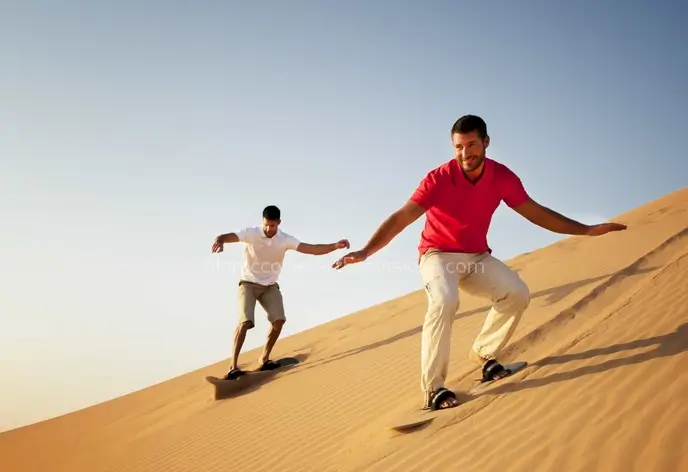
Most visitors ride a camel to a camp for one night. With more time, add a 4×4 tour to Khamlia and a nomad family, a quad ride, or simply sandboarding at camp. See all options on things to do in Merzouga.
Merzouga travel questions
How many nights should I spend in Merzouga?
Two is ideal: one at the camp and one more to explore. One night works on a tight schedule, but you will spend most of the day before and after driving.
Is it worth going from Marrakech for only two days?
It is possible, but you will spend most of both days in a vehicle. If you can, give it three days or more.
Is Merzouga safe for travellers?
Merzouga is a calm village used to visitors. Normal precautions apply: keep valuables close, agree prices before services, and use known operators for desert trips.
Can I visit the desert without staying at a camp?
Yes. You can stay at a hotel in the village and walk onto the dunes at sunset. But a night at camp is when the desert is quietest.
Will my phone work in the desert?
Coverage is usually available in Merzouga village and often at camps, but it can be weak in the dunes [CONFIRM camp Wi-Fi/mobile signal].
Is there anything to do if it is very windy?
Yes. Visit Rissani’s market, Khamlia’s Gnawa musicians, or simply wait it out at your hotel. Wind usually drops in the evening.
Planning your stay
How long to stay
One night is the minimum; two or three nights let you rest and explore. In this Merzouga travel guide we usually suggest two nights: one at a desert camp and one in a hotel at the edge of the dunes, with a full day in between.
Where to stay
There are three main choices. Desert camps sit inside the dunes and give you the quiet and the stars. Hotels and kasbah-style guesthouses line the village along the edge of the sand. A few simple guesthouses are in the village centre. Our Merzouga travel guide tip: book the camp for the night you most want to remember, and a hotel for the night after a long drive.
Booking ahead
Spring, autumn and the Christmas and New Year period fill up early. If your dates fall then, use this Merzouga travel guide to plan your route first, then book transport and accommodation a few weeks ahead [CONFIRM].
A typical first day in Merzouga
Most people arrive in the afternoon after a long drive. Here is how a first day often runs; adjust the times with the month-by-month table in this Merzouga travel guide.
- Afternoon: arrive, leave your main bag at the hotel or in the vehicle, drink water and rest
- Late afternoon: camel or 4×4 to camp, timed for sunset
- Evening: dinner, campfire and music
- Night: stargazing away from the lights
- Dawn: sunrise from the nearest high dune, then breakfast
Food and drink
Meals in Merzouga are simple and generous: tagines, couscous, salads, bread and fruit. A local speciality is medfouna, a stuffed flatbread from Rissani sometimes called Berber pizza. This Merzouga travel guide recommends trying it at least once.
Alcohol is not widely available in the village, and some places do not serve it at all [CONFIRM camp policy]. Mint tea is offered everywhere. Vegetarians eat well, and vegans should mention it in advance. Our Merzouga travel guide advice is to tell your hotel or camp about dietary needs when you book.
Photography in the desert
This Merzouga travel guide suggests three habits for cameras: change lenses inside a bag or tent, carry a soft brush, and keep your phone in a zip bag. Sand gets everywhere, very quickly.
The best light is in the first and last hour of the day. At midday the dunes look flat and very bright. Ask before photographing people, and remember that drones are tightly restricted in Morocco [CONFIRM current rules].
Getting around once you are here
The village is spread out along one main road, and walking between hotels can take a while in the heat. Most hotels and camps arrange transfers. A key point in this Merzouga travel guide: do not drive a normal car onto the sand, even for a short distance.
Taxis and local drivers run between Merzouga, Rissani and Erfoud [CONFIRM]. Agree the price before you set off. If you are on a tour, your driver handles all transfers.
Staying connected and charged
Mobile coverage is generally good in the village. At camps inside the dunes it varies, so download maps and anything you need before you leave the village [CONFIRM camp Wi-Fi]. Electricity at camps may be limited at night; bring a charged power bank and charge cameras whenever you can.
Sunrise and sunset
Sunset is the moment most people plan around. In winter it comes early, around [CONFIRM winter sunset time], so long drives need an early start. In summer it is much later, which gives you a cooler evening on the dunes. Whatever the month, this Merzouga travel guide recommends reaching the top of a dune 20–30 minutes before sunset, because the best colour often comes just before the sun disappears.
Sunrise is quieter and often more beautiful. You climb in the cool, blue half-light, and the shadows of the dunes stretch a long way as the sun comes up. Wear warm layers: even in spring, the hour before dawn can be cold.
Responsible travel
Merzouga depends on tourism, but it is also home to families who live here all year. This Merzouga travel guide asks you to keep a few things in mind:
- Water is precious in the desert, so take short showers
- Take your rubbish back to the village, including small items
- Buy crafts, dates and fossils directly from local makers when you can
- Stay on existing tracks with quads and 4×4s
- Keep noise low at camps and near homes at night
Special occasions
Christmas, New Year and Easter holidays are popular times for a night in the dunes, and camps can be fully booked [CONFIRM]. If you plan to celebrate, use this Merzouga travel guide to check the weather for that month: December nights are cold.
Couples sometimes plan a proposal or anniversary in the dunes, and readers of our Merzouga travel guide often ask how to time it. Tell us in advance and we will help you plan around sunset [CONFIRM what can be arranged].
More Merzouga questions
Can I drink the tap water?
We recommend bottled or filtered water. This Merzouga travel guide suggests bringing a reusable bottle and refilling it where filtered water is available [CONFIRM at camp].
Is Merzouga suitable for children?
Yes. Children usually love the dunes, sandboarding and the camel ride. Plan shorter drives where you can, protect them from the sun, and follow the safety advice in this Merzouga travel guide.
Is there a pharmacy nearby?
Rissani and Erfoud have pharmacies [CONFIRM]. Bring any regular medication from home, plus basics for sun, stomach upsets and small cuts.
Do I need to speak Arabic or French?
No. Many people working in tourism speak English, and some speak Spanish, German or Italian. A few words of Arabic, such as “shukran” (thank you), are always appreciated.
Plan your trip
- Marrakech desert tours to Merzouga (2 to 5 days)
- Fes desert tours to Merzouga (round trips and one-way)
- Errachidia to Merzouga desert tours (fly in, short drive)
- Our Merzouga desert camp: what your night in the Sahara looks like
- Things to do in Merzouga: desert activities with locals
Questions about your trip?
Our team lives in Merzouga. Ask us anything about roads, weather or timing. – Ask on WhatsApp: +212 667 850 421 (8:30–20:00 Morocco time) – Contact form: Check availability & get a quote – Email: [EMAIL ADDRESS]